Small Island, Big Circles: A Love Letter to Britain's Most Emotional Roundabouts
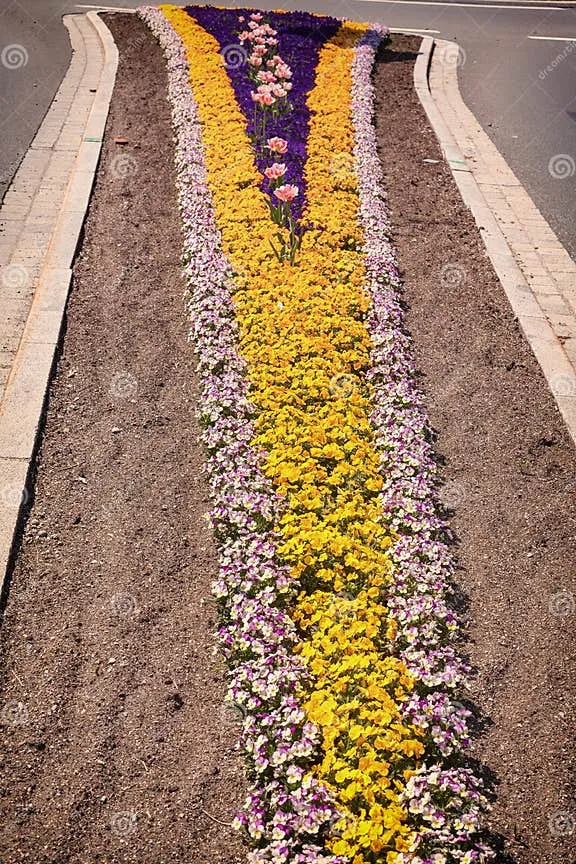
Photo: decorative floral roundabout Britain traffic island, via thumbs.dreamstime.com
Britain has approximately 25,000 roundabouts. Nobody knows the exact number, because counting them would require someone to care, and caring about roundabouts openly is considered slightly unhinged in this country.
Well. Consider me unhinged. I've just spent three weekends driving in circles on purpose, and I have come to a conclusion that I believe will reframe how you see the entire nation: the roundabout is Britain's diary. We don't say how we feel. We plant it.
The Model Village on the A38
Let's start with the heavyweight. Near the edge of a small Somerset town, on a roundabout most people traverse at 30mph while thinking about nothing, sits a miniature model village. Tiny houses. A tiny church. A tiny postbox. Someone, at some point in history, looked at a patch of municipal grass in the middle of a road junction and thought: you know what this needs? A second, smaller version of everything.
And here's the thing — they were right. Locals tend it. Someone waters the tiny flowers, which are themselves miniature versions of regular flowers, which is a sentence I've had to sit with for a while. I asked a man at the adjacent petrol station why it was there. He shrugged and said, "Dunno. Always been there. Dave used to do it but Dave's moved to Spain." That's it. That's the entire heritage plaue. Dave's moved to Spain.
What it represents, though, is everything. A community so quietly devoted to a joke of its own making that the joke now has a maintenance rota.
The Naming of Things
Roundabouts with nicknames are their own genre of British folk art. Every town has one. The Magic Roundabout in Swindon — five mini-roundabouts arranged in a pattern that reads like a threat — is the famous one, but the real magic is the small stuff. The one locals call "the Bomb Site" for reasons nobody remembers. The one known only as "Big Ted." The one in the Midlands that a Facebook group of 4,000 people simply call "Doreen."
Naming a roundabout is an act of love. You don't nickname things you're indifferent to. Nobody's got a pet name for the bins. But a roundabout you pass every single day on the way to a job you tolerate and a life you mostly enjoy? That roundabout becomes furniture. It becomes yours. Naming it is how a town says "we live here, this is ours, and we have a sense of humour about it, because what else is there?"
The Floral Cold War
Then there are the flowers. Oh, the flowers.
Britain in Bloom is nominally a horticultural competition. In practice, in certain parishes, it is a low-intensity civil conflict that has outlasted several governments. I visited one village where the roundabout planting scheme has been the subject of parish council disputes for over a decade. The current display is a riot of reds and golds arranged, according to one councillor I spoke to, "in the pattern Cllr Hayes wanted, which is a shame, because it's wrong."
Wrong how? I asked.
"The colours. They're not in the order we agreed in 2019."
There are minutes. There is a sub-committee. There is a man who measures the bedding plants. And underneath all of it — under the passive aggression and the archived correspondence — is something genuinely touching: a group of people who care enormously, publicly and for free about how a bit of grass in the road looks to strangers driving past at speed.
We are told the British are emotionally constipated. But show me a nation that expresses itself more honestly than one that plants its heart out on the A-road and then fights about the colour order for six years.
What the Circles Mean
Here's my theory, and I'm driving it home whether you like it or not. The roundabout is the perfect British symbol. It's functional but not efficient — there are faster ways through a junction, but they involve decisions and confrontation, and we'd rather all just keep going round, politely, in agreement, giving way to the right.
And onto that circle — that spinning, polite compromise — we project everything we can't say out loud. Grief gets a memorial garden on one in Wiltshire. Pride gets a flag display in Yorkshire. Local history gets a sculpture of a sheep, or a boat, or in one glorious case, a giant inflatable-looking steel thing that everyone hates and everyone would miss immediately if it went.
The French have the Arc de Triomphe. We have a roundabout in Shropshire with a well-tended rose bed and a laminated sign saying "PLEASE DO NOT WALK ON THE ISLAND. WE KNOW WHO YOU ARE."
I know which one tells you more about a country.
So next time you're circling one, doing 15mph in third gear, give a nod to the island. Somebody planted that. Somebody argued about that. Somebody's Dave used to look after that, before Dave moved to Spain.
That's not traffic infrastructure. That's us.