Six Hours, One Deck of Chips and the Meaning of Everything: Riding the N1 Until Sunrise
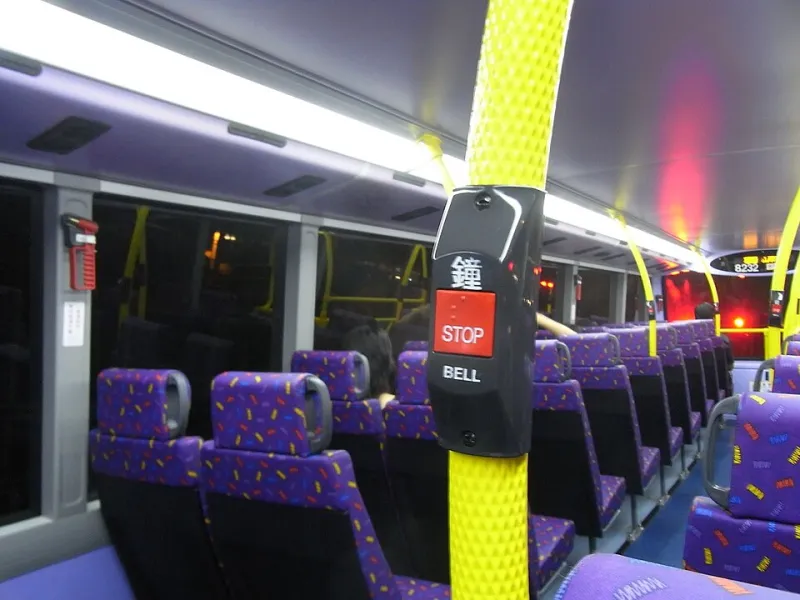
Photo: Barziealeuim, CC BY-SA 3.0, via Wikimedia Commons
There is a moment — usually around half past one in the morning, somewhere between the retail park and the ring road — when the night bus stops being public transport and becomes something closer to a floating chapel. The lights are too bright. The engine hums like a monk who's had a Red Bull. And everyone on board, for reasons none of us can explain, starts telling the truth.
I rode the N1 from midnight to dawn on a Saturday, on a purely academic basis, which is to say I had nothing better to do and a Thermos of questionable coffee. What follows is my field report.
The Boarding Ritual
You cannot simply board a night bus. You must be processed. The queue outside the stop is its own micro-society: two lads in shirts that have given up, a woman with a full Zara bag who has clearly been to war, and a man eating a mixed kebab with the focus of a surgeon.
The driver, a woman of magnificent indifference named — according to a laminated sign — Maureen, checks passes with the weary authority of a border guard who has seen too much. She does not smile. She does not need to. She is the lighthouse; we are the ships.
The Saloon of Souls
By 1am, the upper deck has sorted itself into a loose parliament. Front row: the shift workers, nurses and warehouse folk, silent, dignified, radiating the calm of people who have already done eight hours while you were doing Jägerbombs. They are the aristocracy of the night bus and everyone knows it.
Middle section: what I can only describe as the philosophers. A man in a bucket hat is explaining to nobody in particular that "money isn't real, mate, it's just a group agreement." Nobody disagrees. It is 1:40am and the group agreement is the bus.
And at the back, the party contingent, slowly deflating. One girl is on the phone to a friend named Chloe, narrating her evening with the emotional granularity of a war correspondent: "...and then he said the thing, Chloe. THE thing." The bus collectively knows about the thing by 2am.
The Man Who Knows the Driver
Every night bus has one. A chap who boards at the fourth stop, greets Maureen by name, and settles in like he's visiting a timeshare. "How's the hip, Mo?" I hear him ask. She grunts. This, I gather, is a deep and long-standing friendship.
He later tells me — unprompted, over the space of two stops — that he used to drive the N1 himself, that Maureen trained him up in '09, and that the trick to a good night route is "knowing when not to talk." He then talks for forty minutes. It is, honestly, wonderful. He knows which stops flood, which takeaways do chips until four, and the exact bench where he proposed to his wife (Stop 14, outside the closed garden centre). I exit the conversation with his nephew's phone number and no memory of why.
The 3am Slump
There is a natural trough. Around three, the bus goes quiet. The philosophers have alighted or ascended. The kebab man is asleep holding his foil parcel like a teddy bear. The only sounds are the engine, the occasional snore, and the automated voice announcing stops to a near-empty road.
It's in this hour that you notice the strange intimacy of it all. Six strangers, breathing in unison, hurtling through a sleeping town. Someone's shopping bag rustles. A phone alarm goes off and is silenced. Somebody murmurs "sorry" to nobody. It is, in its way, church.
Dawn, and the Great Dispersal
By 5am the sky is doing that bruised grey thing, and the population changes over. The party crowd is gone. In their place: bakers, cleaners, the first ferry of early risers, a teenager in full gym kit who is clearly going nowhere in particular. The bucket hat philosopher reappears — where was he? — and delivers his closing argument to the deck: "See? Told you it'd come back round."
He means the bus. He might mean everything.
When I finally step off near the hospital, legs stiff, Thermos empty, Maureen gives me a single nod. It is the recognition nod — you know the one — and it contains an entire conversation: you were here, you saw it, we survived.
The night bus is not glamorous. It is not fast, and it is rarely on time. But it is the last genuinely communal space Britain has left — a mobile community centre with worse lighting and better chat. Long may it rumble.
Frank rode the N1 so you don't have to. You should anyway. Bring a Thermos and lower your expectations of arrival times.